

Every week, there’s another gadget promising to make your dairy smarter, faster, easier. A new collar. A new camera. A new software platform that swears it’ll cut your labor in half and pay for itself in six months.
Here’s the truth nobody in a show booth will tell you: technology will not fix broken systems. It just exposes them faster.
Why Tech Decisions Go Wrong
When a new technology doesn’t work out on a dairy, it’s almost never because the product was bad. It’s because it didn’t fit. We see three failure patterns over and over again:
-
Operational fit — The technology doesn’t match the people, the workflow, or the physical setup of the operation. It was built for a different kind of dairy than yours.
-
ROI was hope, not math — The numbers looked compelling on a brochure, but no one stress-tested them against real costs, real labor, and real usage patterns.
-
No one owned it — The team wasn’t bought in, wasn’t trained, and didn’t have a clear point person. Without ownership, even great technology fades fast.
The dairies that win with technology know their priorities, know their people, and make the tech fit them — not the other way around.
A Framework for Smarter Decisions: 3 Tools Before You Buy
Before you invest in any new dairy technology, run it through these three evaluations. They take less than an hour and will save you from a very expensive mistake.
Tool 1: The Operational Fit Checklist
Ask yourself: Does this technology actually match how my dairy runs?
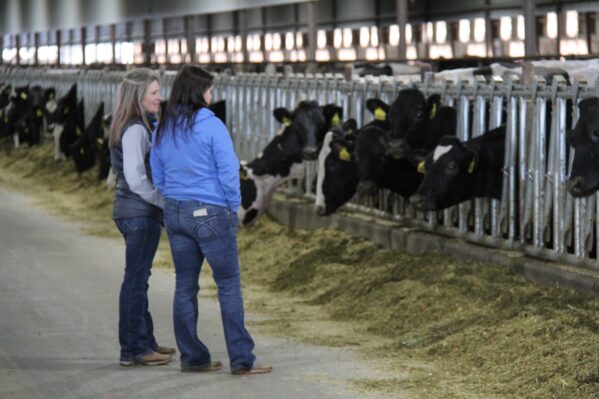
This means looking honestly at your herd size, your team’s skill level with data and technology, your housing system, and your daily workflows. A tool that’s perfectly designed for a 3,000-cow operation with a dedicated data manager may be a frustration on an 800-cow farm where the herdsman is already wearing five hats.
Key questions to answer before you say yes:
-
Does my team look at data and act on it daily — or does it pile up?
-
Is my facility physically set up to support this technology?
-
Do I have someone who can own and champion this system long-term?
A strong operational fit score means you’re buying a tool that your operation is ready to use. A weak score doesn’t mean the technology is bad — it means now isn’t the right time, or something else needs to come first.
Tool 2: The ROI Readiness Scorecard
This is where a lot of producers get burned. The projected ROI is only real if the technology is actually used the way it was designed to be used.
Take activity and rumination collars as an example. The benefits are real — better reproductive performance, earlier health detection, fewer missed heats. The costs include hardware, subscriptions, training, and ongoing data management. Used daily by someone who acts on the alerts, you can see payback in 12–24 months. But if the data just sits there?
You bought a really expensive necklace.
Your ROI scorecard should force honest answers about:
-
What will this technology actually cost — hardware, subscription, training, and staff time?
-
What specific, measurable outcomes will improve — and by how much?
-
Who will use this data daily, and what will they do with it?
-
What’s the realistic payback timeline for my operation at my scale?
If you can’t answer those questions with real numbers, the ROI is still hope, not math.
Tool 3: The Implementation Confidence Map
Even the best technology won’t work if your people aren’t bought in and your support structure isn’t ready. Before any rollout, you need clear answers to three questions:
-
Who owns this system? One or two people need to live in that data every day. Without a champion, it fades.
-
Who is trained — and who trains the next person? Team turnover is real. Your implementation plan has to outlast the person who set it up.
-
Who do you call when something breaks? Not just your dealer — but your dealer’s backup. When you run 24/7, “call us Monday” isn’t good enough.
When we see technology succeed on a dairy, it’s always because someone took ownership and had a real support structure behind them. When we see it fail, it’s almost always a people and readiness problem — not a hardware problem.
Let’s Put It to the Test
Here’s an example of how the three tools play out on a real technology, activity, and rumination collars.
Operational Fit: Strong for larger dairies with structured reproduction programs and team members who are comfortable working with data daily. If your team is still jotting down observations on clipboards or your herd is under 400 cows, the fit weakens, and the payback timeline stretches out. Score: solid for mid-to-large sized operations with good routines.
ROI: Clear upside — better repro outcomes, earlier illness detection, labor savings on heat detection. The math works if someone is acting on the alerts every single day. Score: strong, with conditions.
Implementation: This one comes down entirely to people. Who owns it? Who’s trained? What’s the escalation path? When those answers are clear before the install, this technology thrives. When they’re not, it stalls. Score: strong only if your readiness plan is already built.
Using AI as Your Decision Tool
Here’s where things get interesting — and where dairy producers have a new tool most aren’t using yet.
Describe your operation — herd size, housing system, management style, labor structure — and the technology you’re evaluating. Ask it to walk you through your specific situation through the Operational Fit Checklist, the ROI Readiness Scorecard, and the Implementation Confidence Map. It takes minutes and costs nothing.
AI won’t tell you what to buy. That’s not the point. Instead it will help you slow down and make the decision with your head, not the hype. In practice, it organizes your thinking, surfaces questions you hadn’t considered, and gives you a documented rationale your lender will appreciate. AI serves as a sounding board; you’re still the one making the call.
Technology for dairy operations works best when it’s introduced strategically rather than reactively. AI helps you evaluate before you spend.
Click here to watch a walkthrough with Torie Little using our AI prompt tool to evaluate a TSR purchase. https://vimeo.com/1192313207?fl=tl&fe=ec
Run your own operation through the same evaluation using our AI prompt tool: https://www.bowerag.com/dairy-technology…t-ai-prompt-tool/
What This Means for Working with Bower Ag
At Bower Ag, we don’t show up with a catalog and a list of things you should be buying. We show up with questions.
What are your biggest operational bottlenecks right now? Where are you losing time, money, or cow performance? What has your team tried before that didn’t stick — and why? What does your next three years look like?
Those answers tell us what technology, if any, is actually the right next step. And because we handle design-build, equipment, automation, and service and support under one roof, we’re not pushing you toward one brand or one product. We’re looking at your whole operation and asking what’s actually going to reduce unplanned downtime, tighten reproductive performance, and improve parlor throughput, what’s actually going to move the needle.
If that sounds like the kind of thinking your operation needs, let’s talk.
Related Posts

Beyond By-Products: Transforming Dairy Challenges into Assets—Part 2
Key Takeways Biogas unlocks major revenue for large dairies. 3-step systems turn digestate into fertilizer cake and cleaner water. Most dairies recoup costs in 3–7 years. Digestate is harder to…

Beyond By-Products: Transforming Dairy Challenges into Assets—Part 1
Key Takeaways Manure is no longer just waste—it’s a valuable asset. Sand management is the foundation of success. Scale makes smart manure management critical. Strong fundamentals drive lasting results.…
The Chemical Myth: Five Other Factors Impacting Milk Quality
In a previous role, I was spending time with a dairy nutritionist who was telling me about an experience he had with a dairy customer. This dairy was struggling with…